WHAT'S COMING UP?
You are invited to join us for our Events
Whether you're a longtime Friend, spiritual seeker, or curious neighbor, come discover how the Quaker Way continues to guide us and illuminates our path forward
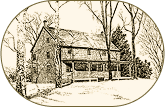
MATINECOCK QUAKER MEETING HISTORY
One of the oldest continuously used meeting houses in New York.
Our celebration honors the extraordinary legacy of Long Island as one of the birthplaces of American Quakerism—decades before William Penn's Pennsylvania colony.
The story of religious freedom in America actually begins here on Long Island. When Dutch Governor Stuyvesant persecuted early Friends, residents of Flushing drafted the Flushing Remonstrance in 1657, a plea for freedom of conscience that became the origin of religious freedom in America.
![Meeting House1[1]](https://www.matinecockquaker.org/hs-fs/hubfs/Meeting%20House1%5B1%5D.jpg?width=963&height=686&name=Meeting%20House1%5B1%5D.jpg)
-1.png?width=1297&height=1649&name=download%20(4)-1.png)
Image Credit: TriCollege Libraries Digital Collections
John Bowne's courageous stand—opening his home for Quaker meetings despite persecution—led to his arrest and eventual victory in Holland, establishing religious freedom twenty-six years before the English Toleration Act.
When George Fox visited Long Island in 1672, he found fertile ground for the Quaker message. By 1671, Friends were already meeting in private homes in Matinecock, alternating with Oyster Bay meetings.
In 1724, after Thomas Chalkley suggested building a meeting house during his visit to nearby Glen Cove, local Quakers commissioned John Mott to construct our simple meeting house for twenty pounds, nine shillings.
Long Island Quakers' 300-year journey includes standing against slavery (achieved consensus by 1775), maintaining our peace testimony through the American Revolution, founding the Charity Society in 1794 to support formerly enslaved people, and the establishment of Friends Academy.
With the Quakers in New York City, we pioneered educational initiatives from Westbury Friends School to Friends World College, and the development of the internationally successful Alternatives to Violence Project in 1975.
This 300th Anniversary celebrates not just our past but our continuing growth. The Light continues to move among us today, calling new generations to discover the transformative power of community worship and faithful witness. Our historic meeting house stands not merely as a monument to the past, but as a living space where we continue to commune with the divine and with one another today.
-1.png?width=1700&height=1346&name=download%20(3)-1.png)
Image Credit: TriCollege Libraries Digital Collections